BYD Flash Charging Is Coming to the UK. What Does It Mean for Your Fleet?
Five minutes to charge from 10% to 70%. Nine minutes to near-full. In the time it takes most drivers to grab a coffee, BYD’s Flash Charging technology can add hundreds of miles of range to a compatible electric vehicle.
This is not a concept or a roadmap promise. BYD has already demonstrated Flash Charging in the UK, and 300 chargers are committed to the UK network. For fleet managers navigating the shift to electric, it is one of the most significant infrastructure developments of the year – and your fleet management planning should already be accounting for it.
What is BYD Flash Charging?
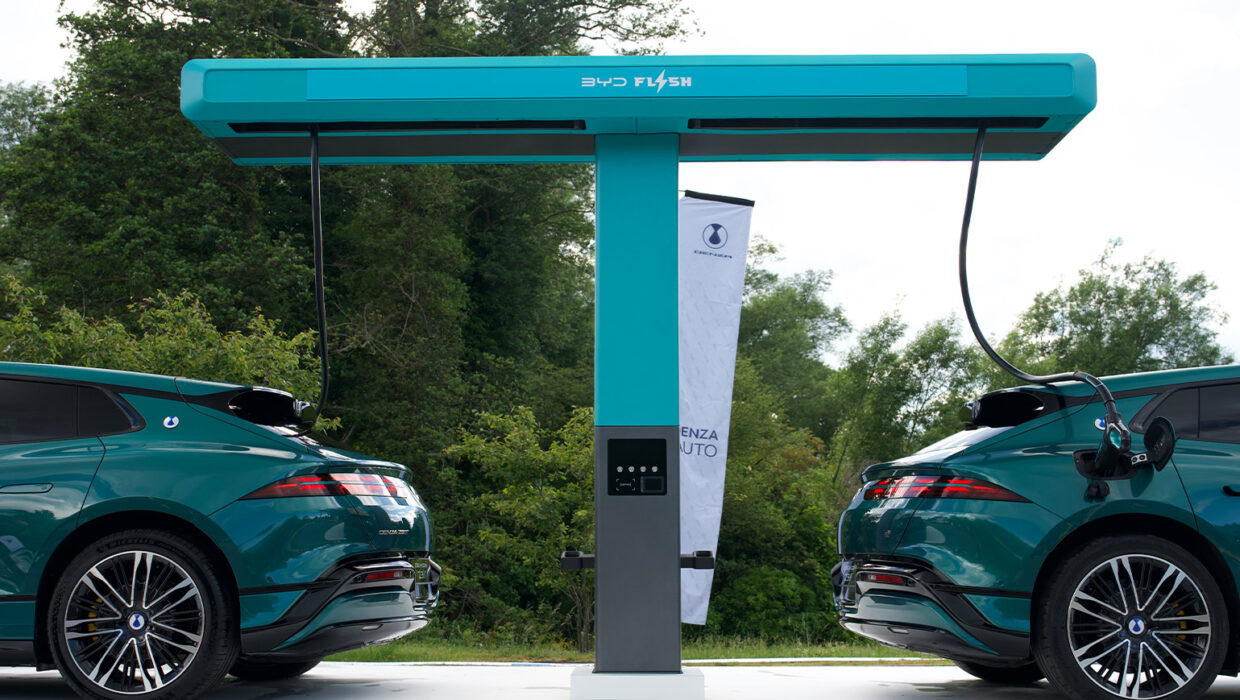
Flash Charging is BYD’s second-generation ultra-rapid charging system, built around its second-generation Blade Battery, which uses lithium iron phosphate (LFP) chemistry with redesigned internal architecture. The system delivers up to 1,500kW through a single charging cable.
For context: the fastest ultra-rapid chargers currently available in the UK cap out at around 400kW. Flash Charging offers more than three times that output.
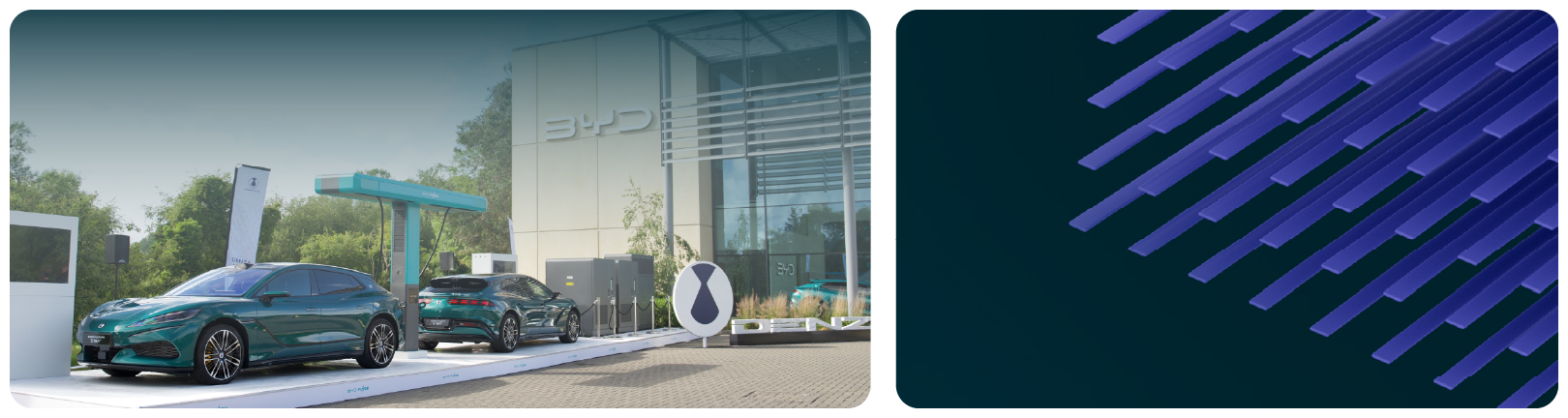
The headline figures, confirmed at a UK demonstration at BYD’s Uxbridge headquarters, are:
- 10% to 70% charge in five minutes
10% to 97% charge in nine minutes
20% to 97% charge in 12 minutes, even at -30C
At that demonstration, a Denza Z9 GT – the shooting brake grand tourer that is the first Flash Charging-compatible vehicle arriving in the UK – added 223 miles of range in five minutes.
How does it handle the grid?
This is the question that matters for anyone thinking seriously about infrastructure. Each Flash Charger incorporates two on-site battery storage units totalling 370kWh. That stored energy charges gradually from the grid, then delivers the high-power burst when a vehicle plugs in – rather than drawing 1,500kW directly from the grid in real time.
The result: a Flash Charger requires no greater grid infrastructure than a conventional rapid charger. It is also designed to integrate with rooftop solar, and BYD has confirmed it is targeting below 50p per kWh for BYD and Denza drivers, against the current 70-89p charged by most rapid networks.

What is the UK rollout plan?
BYD has committed to 300 Flash Chargers across the UK, starting at BYD and Denza dealerships in major cities before expanding to motorway service stations, charging hubs, and high-traffic retail locations. The chargers are open to all CCS2-equipped vehicles – not exclusively BYD models, though the full 1,500kW output is reserved for Flash Charging-compatible cars.
What about commercial fleets?
Flash Charging is, for now, the preserve of BYD’s premium passenger car range. But the direction of travel matters for van fleets too. BYD’s E-Vali electric van is due to arrive in the UK next year in both L2 and L3 variants, each carrying an 81kWh battery. It does not support Flash Charging, but it will charge at up to 188kW – enough to deliver a 10% to 80% charge in around 30 minutes. For fleet managers worried about charging downtime with commercial vehicles, that is a meaningful step forward, and a sign that faster charging is moving through the entire BYD range, not just the flagship models.
What does it mean for fleet management planning?
Here is where the fleet conversation gets important – and where most public coverage misses the point.
A 2024 YouGov survey found that 42% of UK car buyers cited slow charging times as the single biggest reason not to buy an electric vehicle. That figure has shaped fleet policy and transition timelines across thousands of businesses. Flash Charging does not eliminate that concern overnight, but it sets a new benchmark and compels the rest of the infrastructure market to respond. BYD has already confirmed the technology will trickle down from premium models to mainstream vehicles as production scales. And BYD is not alone: Xpeng is already offering charge speeds of up to 500kW on its latest models, confirming that ultra-rapid charging is becoming a competitive battleground across manufacturers, not a single-brand story.
For fleet managers, the questions this raises are practical:
- Is your charging infrastructure strategy keeping pace with where vehicle technology is heading in the next two to four years?
- Does your fleet policy reflect a realistic picture of charging speeds and driver behaviour as the network evolves?
- Are the vehicles you are specifying today compatible with the infrastructure landscape of your next contract cycle?
This is exactly what VISTA is for
Steve Beadle, Head of VISTA and Pricing at Grosvenor, has been tracking developments like this closely – not as a spectator, but as an active adviser to the fleet managers who need to make real decisions based on where technology is heading, not where it has been.
VISTA, Grosvenor’s fleet consultancy service, covers the full landscape of future fleet and mobility planning. Flash Charging sits across several of its pillars at once. On Infrastructure, megawatt-class charging changes the calculation around workplace investment and en-route reliance. On Propulsion, the case for battery electric strengthens materially when charging approaches the speed of a fuel stop. On Policy, a rapidly evolving vehicle landscape means choice lists, EV mandates, and driver eligibility frameworks need regular review to stay current. On Financial, BYD’s sub-50p per kWh target combined with the 4% BiK rate on electric vehicles creates a total cost of ownership picture that warrants fresh analysis for any fleet still weighing the transition.
The businesses that will transition most smoothly are not the ones that react to infrastructure developments as they arrive. They are the ones already working through the scenarios, updating their policies, and building the flexibility to move quickly when the market moves around them. That is the work VISTA does.
Talk to Steve and the Grosvenor VISTA team about future-proofing your fleet.
Find out more about VISTA | info@grosvenor-leasing.co.uk or 01536 536 536